In March 2016 a Google DeepMind program called AlphaGo won a five-game Go match against Lee Sedol, one of the strongest human players of his generation, taking four of the five games in Seoul. Go had spent decades as the standing counter-example to machine dominance in board games, and the result arrived years earlier than most researchers had penciled in. Nobody was hurt, no guardrail was bypassed, and no system misbehaved. What changed was the credibility of expert timelines: an ability that specialists placed roughly ten years out was demonstrated live, on camera, in front of a global audience.
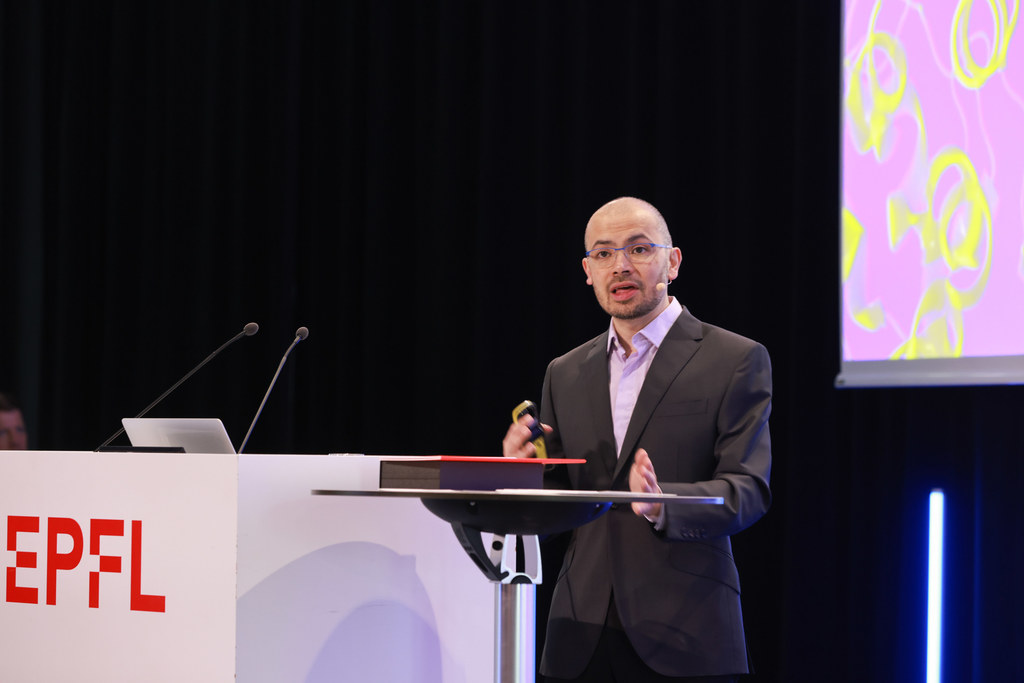
What happened
Google set out the format before play began: five even games, no handicap, Chinese rules with a komi of 7.5, two hours per player plus three 60-second byoyomi periods, and a $1 million purse that DeepMind said it would route to UNICEF, STEM causes and Go organizations if its program won. The games were scheduled for 9, 10, 12, 13 and 15 March 2016, starting at 1pm Korea Standard Time and streamed live (Google).
AlphaGo won the first three games, clinching the series on 12 March. Lee took game four on 13 March, winning by resignation after 180 moves, before AlphaGo closed out the match on 15 March, when Lee resigned after 280 moves in a game commentators could not confidently call until the end. DeepMind's own account puts the worldwide viewership above 200 million (Google DeepMind).
One framing point worth correcting: Go has no single world championship, and coverage of the match described Lee inconsistently. Reporting at the time from TechCrunch called him the second-ranked player in the world, while DeepMind and news wires called him a world champion; the uncontested fact is that he held 18 international titles and was widely regarded as the best player of the preceding decade.
Two moves that people still study
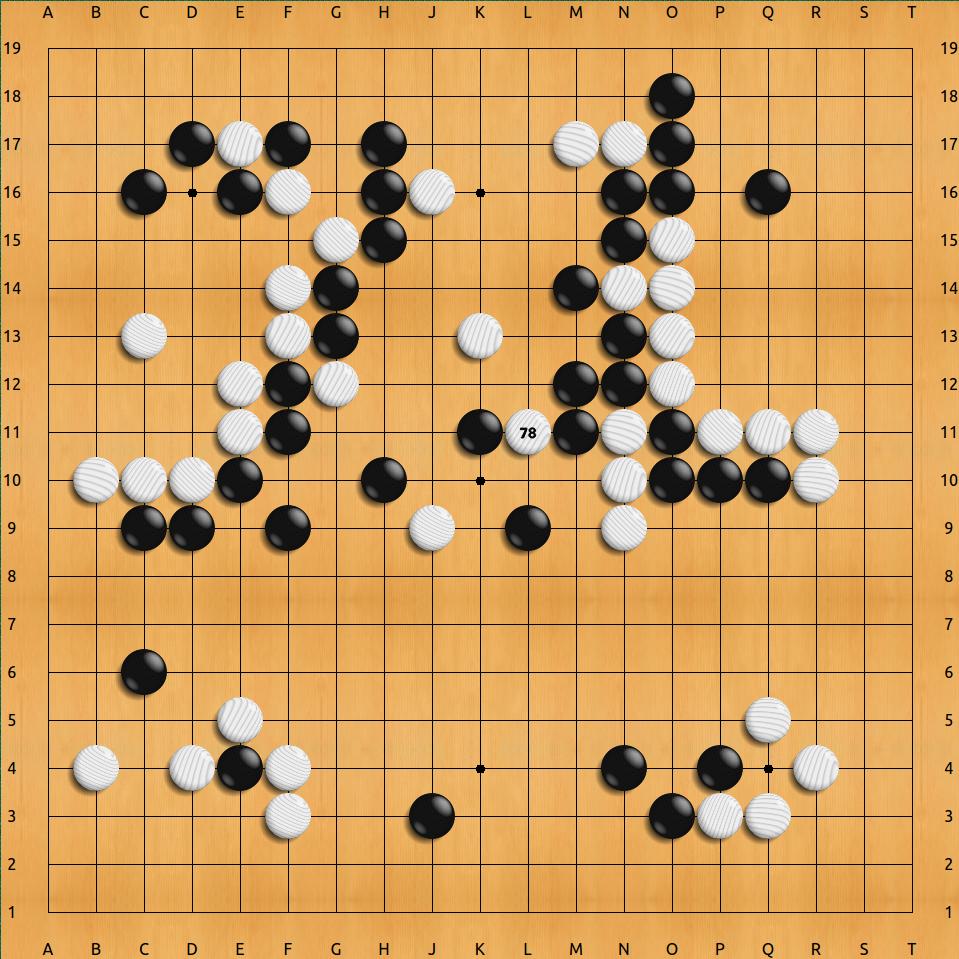
The match produced two now-canonical plays. In game two AlphaGo placed a stone on the fifth line at move 37, a choice DeepMind says human play would have picked roughly once in ten thousand times, and which commentators initially read as an error before it proved central to the win. In game four Lee answered with his own long-shot, move 78, which DeepMind describes as equally improbable and which Go players nicknamed the hand of God.
What made game four instructive was not just Lee's move but what happened inside the program afterwards. Reporting from NPR, carried by GBH, recounts DeepMind's Demis Hassabis explaining on Twitter that AlphaGo's value network still rated its winning chances at roughly 70 percent at move 79, after it had already blundered, and only collapsed at move 87. The system was confidently wrong about its own position for eight moves, a mis-estimation of a kind that would become a familiar theme in later AI systems.
Reception
Before the final game, South Korea's Go association granted AlphaGo an honorary ninth-dan rank, the top grade, according to AFP reporting published by Phys.org; DeepMind describes it as the first time a computer Go player had received that certification. AFP also described a visibly shaken Lee resigning the last game after about five hours of play, and quoted Hassabis calling the finale mind-blowing.
Lee's own assessment after the deciding game was blunter than the celebration around him:
I started off the match thinking that I had an advantage, but the fact that I was still defeated showed up my shortcomings
Lee Sedol, quoted by AFP
Professional commentators at the event were more interested in what the machine had shown them about the game itself. American nine-dan Michael Redmond, commentating for the organizers, said of the one game the machine lost:
Today's game was another example of AlphaGo playing a very interesting, good game. However, move 78 by Lee Sedol was really brilliant — and enabled him to win.
Michael Redmond, on Google's match blog
Timeline
- Oct 2015AlphaGo plays European champion Fan Hui and wins 5-0, the first time an AI system beats a Go professional, per DeepMind's own account of the project.
- 8 Mar 2016Google publishes the match format ahead of play: five even games in Seoul, Chinese rules, 7.5 komi, two hours plus byoyomi per player, and a $1 million purse pledged to charity if AlphaGo wins.
- 9 Mar 2016AlphaGo wins game one; Lee Sedol finishes with roughly 30 minutes left on his clock while the program uses nearly all of its time.
- 10 Mar 2016AlphaGo wins game two, the game containing move 37, and leads 2-0.
- 12 Mar 2016AlphaGo wins game three, clinching the five-game series 3-0 with two games still to play.
- 13 Mar 2016Lee Sedol wins game four by resignation after 180 moves, following his move 78; Hassabis says AlphaGo still rated its own chances near 70 percent at move 79 and only saw the error at move 87.
- 15 Mar 2016Ahead of the final game, South Korea's Go association awards AlphaGo an honorary ninth-dan rank; AlphaGo then wins game five after 280 moves, taking the match 4-1.
- 10 Mar 2026Demis Hassabis publishes a tenth-anniversary retrospective tying AlphaGo's search-and-learning methods to AlphaFold, AlphaProof, AlphaEvolve and Gemini.
Why it moves the needle
AlphaGo is filed here as a capability milestone rather than an incident, and the distinction matters: the system did exactly what its builders wanted, in a sealed domain with a referee and a scoreboard. Its significance is evidentiary. Go had been the discipline's designated proof that pattern-matching and search could not substitute for human intuition, and that proof failed in public, on a schedule nobody had forecast. Every subsequent argument that a particular AI capability is safely years away has to contend with the fact that this one arrived roughly a decade ahead of expert consensus.
The method also travelled. The combination of learned policy and value networks with tree search, bootstrapped by self-play, was generalized into AlphaGo Zero and AlphaZero, and DeepMind now traces a line from that architecture through AlphaFold, AlphaProof and the search-and-planning techniques inside its current Gemini models. In a tenth-anniversary retrospective, chief executive Demis Hassabis argued that the same search-and-learning recipe is what is carrying the lab toward artificial general intelligence, and cited its coding agent AlphaEvolve finding a novel matrix-multiplication method as a later echo of move 37 (Google DeepMind).
The caveat noted at the time still stands. As TechCrunch observed during the series, AlphaGo was a narrow system built for one task, and superhuman board play said little about competence in the unbounded physical world. The needle it moved was not autonomy or danger but calibration: the interval between an ability being called impossible and being demonstrated turned out to be much shorter than the people closest to the problem believed.